01
Progress in more than one way
Progress is not about adding weight every day. You can also perform more reps with the same load or complete the set with better technique at a similar effort.
BUSTAFIT hypertrophy method
BUSTAFIT uses your weights, reps and effort to show whether you are improving, holding steady or need to adjust. That makes progressive overload easier to apply without turning every workout into a theory lesson.
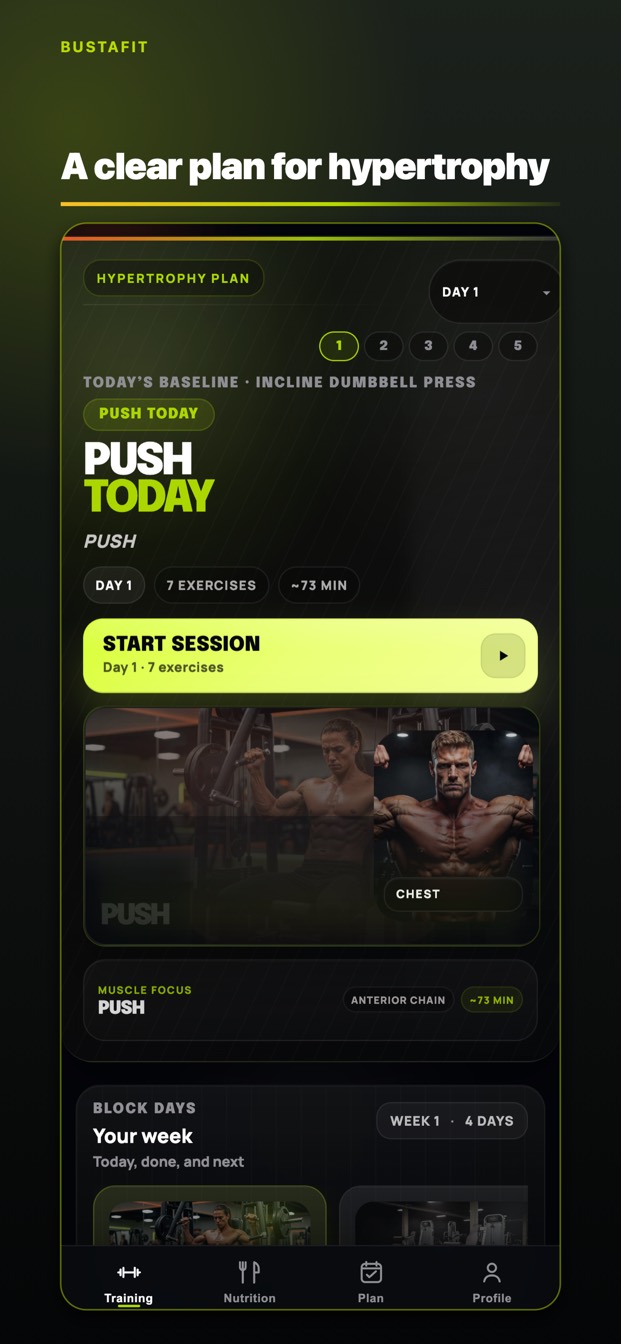
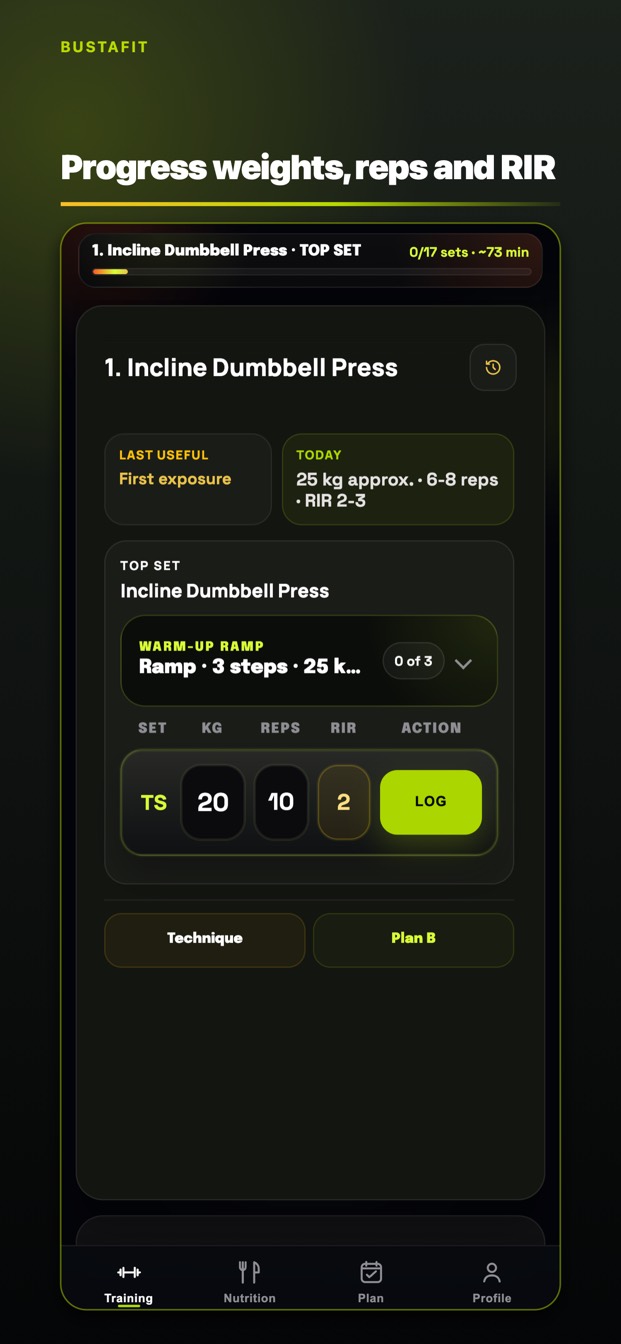
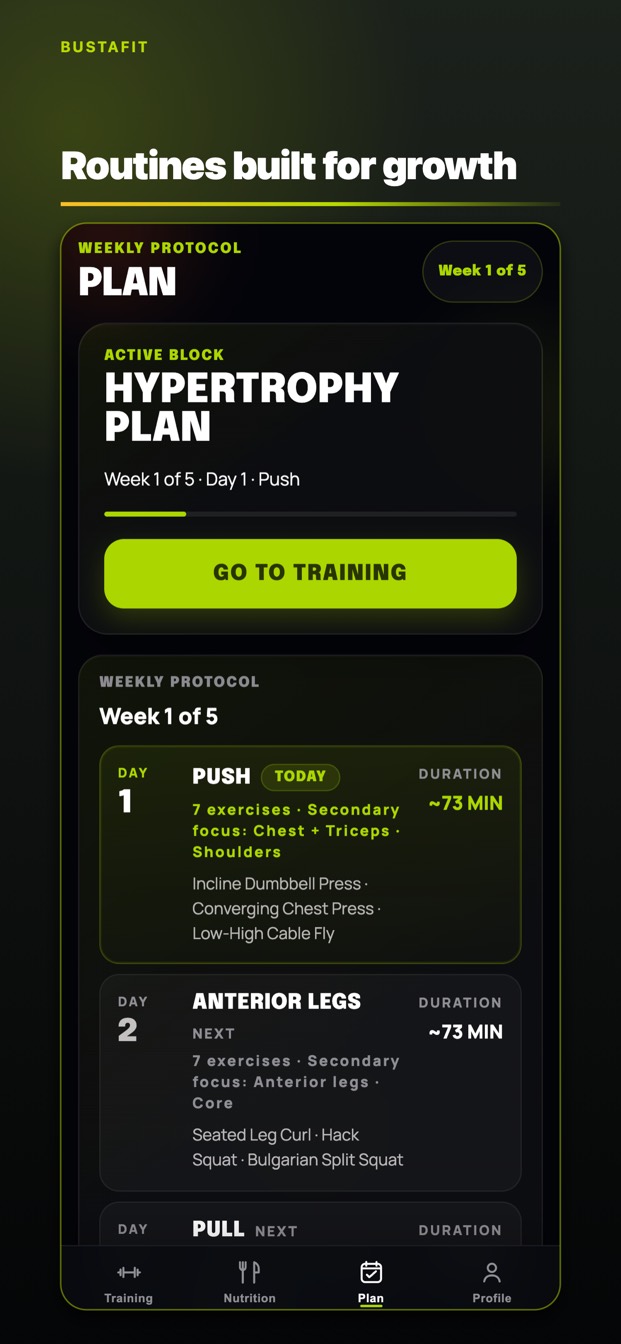
Direct answer
The BUSTAFIT hypertrophy method compares the same exercise across workouts. Load, reps and RIR help you recognize improvement, when to consolidate and when performance across several workouts suggests an adjustment.
From training to progress
The routine tells you what is next. The log preserves what you did. The week shows whether that work continues consistently.
Five ideas you will actually use
These ideas show you what to look for without making you study before you train.
Progress is not about adding weight every day. You can also perform more reps with the same load or complete the set with better technique at a similar effort.
RIR means the reps you believe you could still perform. Together with load and reps, it separates a comfortable set from one that took you close to your limit.
Volume is the amount of work you accumulate. BUSTAFIT helps you see it by week so you can check whether you are handling it or your performance is beginning to drop.
Poor sleep or a different exercise order can affect one workout. A single drop matters less than the same issue repeating across several sessions.
The more comparable workouts you log, the more useful your history becomes. You recover your reference faster and see more clearly whether you are moving forward.
Take it into your next workout
Start by comparing the same exercise and look for a change you can recognize.
You complete two fewer reps with a familiar load. If it was a one-off, log it and continue; if it repeats across several exercises, review recovery, volume or load. The difference is responding to a trend instead of one surprising day.
Use it in the real world
Use the same exercise name, log working sets and compare a similar range. Consistent data makes it easier to see whether you are progressing or something needs attention.
If pain appears, stop the exercise and consult a qualified professional.
See how it works during a workout →Visible sources
These publications expand on the ideas of volume, RIR, progression and proximity to failure used on this page.

Make your progress visible
Start with weights and reps. Add RIR when it becomes useful and let your history work in your favor.