
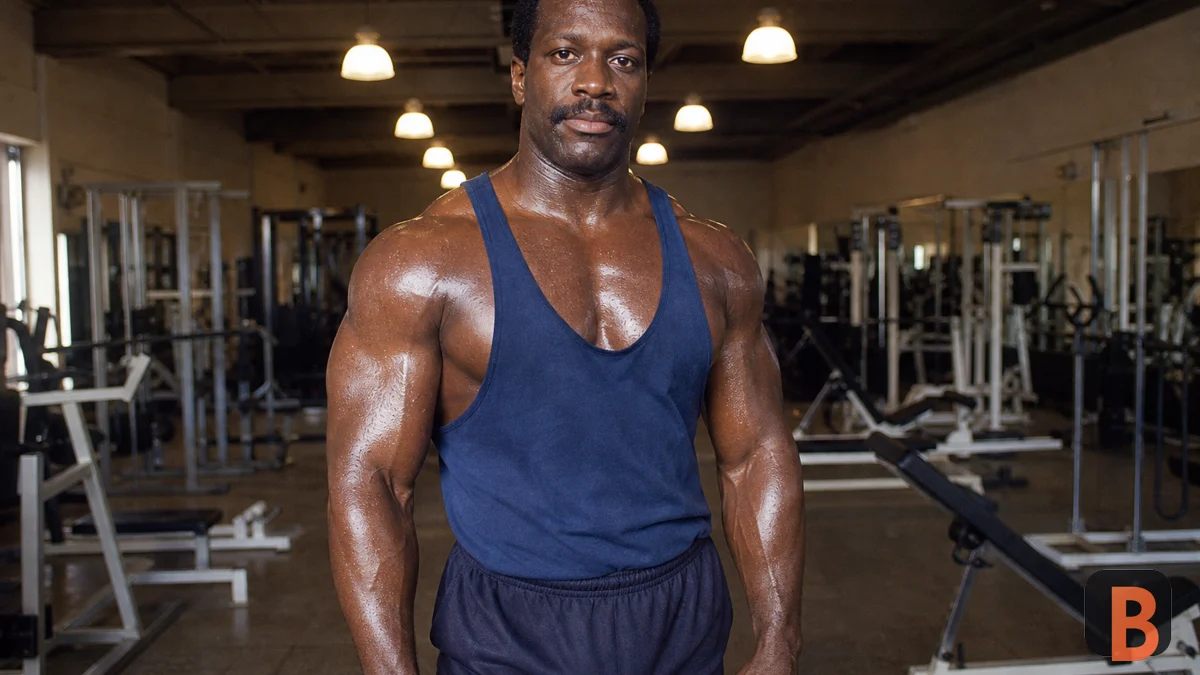
Eight years defending the same summit
Winning once requires arriving ready on one particular day. Winning eight times in a row means surviving years of expectation, rivals, potential injury, adjustment and preparation. Haney reached the summit at 24 and did not surrender the title before retiring as champion in 1991.
His reign changed the scale of the sport. He passed Arnold's seven-win record and raised the standard of size without abandoning a broad, balanced, recognizable line. By the early 1990s, the bar Dorian Yates inherited was already high.
The route to retiring undefeated as champion
| Year | Moment | Reading |
|---|---|---|
| 1979 | Wins Teen Mr. America | The promise appears early. |
| 1982 | Wins Nationals and World Amateur | Clear victories support the professional move. |
| 1983 | Third at his first Olympia | He nears the summit without skipping the learning curve. |
| 1984–1991 | Eight consecutive victories | Annual improvement becomes a reign. |
| 1991 | Retires as champion | The career closes without losing the crown. |
His official biography emphasizes work, delayed gratification, faith and service. It is a personal account rather than a complete explanation of performance. What remains undeniable is that Haney built a career where peak performance and continuity did not look like enemies.
Stimulate, don't annihilate: what it means and what it does not
The phrase survived because it corrects a bodybuilding temptation: treating exhaustion as automatic proof of quality. For Haney, a session needed to create a reason to adapt without turning every workout into debt that could not be repaid.
| It does mean | It does not mean | Useful question |
|---|---|---|
| Train with intent and room to recover | Avoid demanding effort | Can I repeat strong performance when required? |
| Choose a dose that sustains the program | Always leave fresh | Does fatigue serve progression or hide it? |
| Think in months and seasons | Use one universal formula | Does this dose fit my real context? |
There is no copyable Haney amount of fatigue. The same session lands differently according to experience, sleep, exercise and accumulated volume. The principle works better as a question than a number.
The lesson from a champion who knew when to stop
- Find the signal
Define the performance you want to repeat or improve, not the pain you want to feel.
- Record the real dose
Sets, load, repetitions and RIR make a session reviewable.
- Watch the next exposure
If performance keeps falling, the debt matters more than the heroics.
- Adjust without drama
Reducing, redistributing or resting are also training decisions.
Stimulus rather than punishment
A workout ends with the target muscle trained and two useful references. The following week technique and RIR remain stable while one repetition is added. It was not easy; it was productive.
This philosophy fits BUSTAFIT naturally. We care less about whether a session looks epic and more about whether it leaves a reference that improves the next one. Haney turned continuity into dominance. For an ordinary athlete, that may be his most transferable victory.