
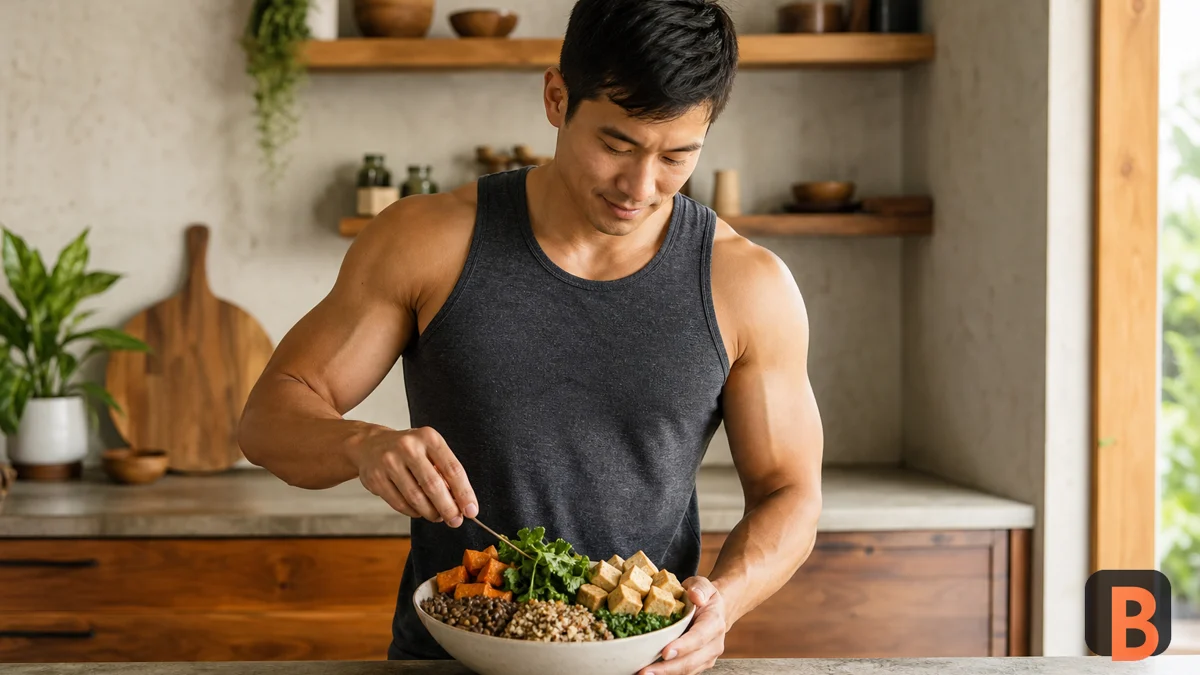
The short answer: yes, but “plant-based” does not organise the week
| Decision | Useful question | Sign it remains unresolved |
|---|---|---|
| Energy | Can you sustain the target without constant fullness or missed food? | Body trend, appetite and performance move the wrong way |
| Protein | Is there a clear source in main meals? | The plate depends on tiny scattered amounts |
| Variety | Do legumes, soy, grains, nuts, seeds or other sources rotate? | The entire week rests on one product |
| Micronutrients | Are B12 and other relevant points planned? | “Eating clean” is expected to cover them by accident |
The protein guide owns quantities because that is where context can be discussed properly. Here we do the work that commonly breaks next: turn a target into normal meals. Every plate need not imitate an omnivorous one; it needs a recognisable protein anchor, enough energy for the phase and a taste that does not make Wednesday feel like punishment.
What the evidence says—and what it still cannot say
| Study | Useful finding | Limit or conflict that changes the reading |
|---|---|---|
| Controlled feeding, 9 days, 40 young active adults | Similar integrated muscle protein synthesis in the studied vegan and omnivorous conditions | Did not measure long-term hypertrophy; funded by Beef Checkoff |
| Training, 10 weeks, high-protein mycoprotein-rich diet | Similar adaptations between studied groups | Young sample and demanding protocol; Marlow funded and employed one author; private partners joined discussions while Exeter retained design, data/analysis, publication and manuscript control |
| 2025 review: 43 eligible, 30 meta-analysed | No significant source difference in strength or performance; no mass difference between soy and milk | Small animal-over-plant advantage for mass overall; heterogeneous comparisons and no trial assessed sarcopenia as an outcome |
| 2026 MPS meta-analysis, 12 studies | Small and uncertain overall difference; similar responses in younger adults | Modest trend from age 65, few studies and acute synthesis rather than long-term hypertrophy |
That table contains neither a total defeat nor a total victory. A short trial measures synthesis under its own conditions; ten weeks addresses the studied training more directly; meta-analyses combine sources, doses and populations to estimate an average. The practical reading is that a well-built plant diet can work, while “anything plant-based in any amount” is not the conclusion.
A meal matrix that does not require counting every lentil
| Moment | Protein anchor | Energy and sides | Finish |
|---|---|---|---|
| Breakfast | Fortified soy yoghurt, tofu or a legume preparation | Oats, bread or fruit according to the plan | Seeds, cocoa or cinnamon |
| Lunch | Lentils, chickpeas, tofu, tempeh or suitable mycoprotein | Rice, potatoes, pasta or bread and vegetables | Acidic sauce or herbs |
| Useful snack | Fortified drink or yoghurt, or another selected protein option | Fruit, cereal or bread as needed | Portable format |
| Dinner | A different source from lunch | Energy base and vegetables | Crunch or spices |
| Reserve | A pantry or freezer protein option | Fast base | Prevents a delay erasing the meal |
A flexible day, not a closed diet
Oats with fortified soy drink and fruit; lentils with rice and vegetables; a snack combining a protein source and convenient energy; tofu stir-fry with potatoes and vegetables. If amounts do not fit your target, they change—the example teaches structure, not portions.
- Choose four anchors
Pick sources you tolerate, can buy and know how to cook. Variety becomes easier from a stable base.
- Give each one a place
Decide which meal uses it. A food list without a time slot does not solve Tuesday.
- Add energy deliberately
During muscle gain, a very bulky vegetable plate may fill you before the target is met. Adjust density and portions with professional help if needed.
- Test for two weeks
Watch adherence, digestion, performance and trend; change one thing rather than replacing the pantry.
Vitamin B12 and other details that should not be improvised
| Point | Why review it | Prudent next step |
|---|---|---|
| Vitamin B12 | Reliable natural sources are limited in vegan diets | Agree on a fortified food or supplement and schedule with a professional |
| Vitamin D | Status also depends on exposure, season and individual context | Follow local guidance and assess clinical context |
| Iodine | Intake changes with salt, fortification and food choices | Do not supplement blindly; review usual sources |
| Iron | Source and the rest of the meal affect availability | Seek advice with symptoms, risk or abnormal blood tests |
| Calcium | Plant products differ greatly in fortification | Read labels and distribute suitable sources |
NHS and NIH guidance makes B12 an explicit decision for vegan diets. This article cannot set a dose because age, blood results, fortified products, medication and clinical context change the plan. “I will take something later” is not a strategy either: identify the source and confirm it with a professional.
Let training provide the other half of the answer
| Data | Question | Decision |
|---|---|---|
| Meals completed | Which preparation failed repeatedly? | Simplify or move it |
| Load, repetitions and RIR | Is training progressing under comparable conditions? | Keep or review the routine |
| Body trend | Is it moving as intended? | Review energy in its guide or with a professional |
| Digestion and wellbeing | Did a change coincide with a new source? | Isolate the change and seek advice if it persists |
BUSTAFIT’s official listing documents load, repetitions, RIR and history, and it also says nutrition, calories and macros can be kept alongside training on iPhone. It does not document generating a vegan diet, assessing micronutrients or prescribing supplements. We like that boundary: a shared view can help review the week, while B12 and the eating plan remain explicit decisions rather than invented app functions.